

Get in touch with us at sakshi2411ss@gmail.com


ABOUT
In India, many people believe in superstitions and these beliefs are often based on fear and wrong ideas about cause and effect, even though science has proven them untrue. This design project aims to create an engaging educational program that raises awareness about the negative impact of superstitions while encouraging self-belief.

People Believe in Superstition

WHY ?
People believe in superstitions due to psychological, cultural, and historical factors. Superstitions provide a sense of control over uncertain situations, offering comfort in times of fear or confusion. The tendency to connect unrelated events, known as illusory correlation, strengthens these beliefs. While some superstitions seem harmless, others can cause big problems. They can spread fear, unfair treatment, and stop people from thinking logically. Kids are especially affected because they might believe in superstitions instead of asking questions and learning the truth. This can make them afraid of silly things and stop them from growing into smart and curious individuals.

SECONDARY RESEARCH
A study published in the International Journal of Nursing Education examined the prevalence of specific superstitious practices among
285 participants:

KEY PROMOTERS


Media has a role to play in removing the blind beliefs, but there are certain television channels that force us to believe certain blind faiths. The pictures in people heads are mainly constructed from the pictures they get from mass media


PROBLEMS IDENTIFIED
Fear and Anxiety in Society
Harmful Practices Affecting Health
Violence Due to Superstition
Financial Loss & Economic Problems
Hindrance to Scientific Thinking
OPPORTUNITY MAPPING
For this design project, opportunities were laid out in terms of design intervention in area where society and citizens are involved. Society will play vital role in awareness to eradicate superstition. Some opportunities are
Gamification & Experiential Learning
A daily tear-off calendar that busts one superstition
Educational program for school kids
Digital Media & Storytelling
EDUCATION PROGRAM FOR KIDS
Superstitious practices can promote fear, discrimination, and social divisions, hindering critical thinking and rational decision-making. Kids are especially affected because they might believe in superstitions instead of asking questions and learning the truth. This can make them afraid of silly things and stop them from growing into smart and curious individuals.
Younger minds are building block of future. Moreover being a considerable portion of the population, they can lead changes in their home and influence changes in society.
THE IDEA
The current academic syllabus of Indian schools does touch upon the topic of superstitions but not always in an explicit or detailed manner.
The idea is to educate kids about superstition and this program can be developed for kids between age of 8- 13 years (i.e class 3rd - 8th)
Educating students about superstition through an interactive presentation, presented by educator either from school or NGOs.
An educational kit will be handed out to students to further promote the cause.
INTERACTIVE PRESENTATION
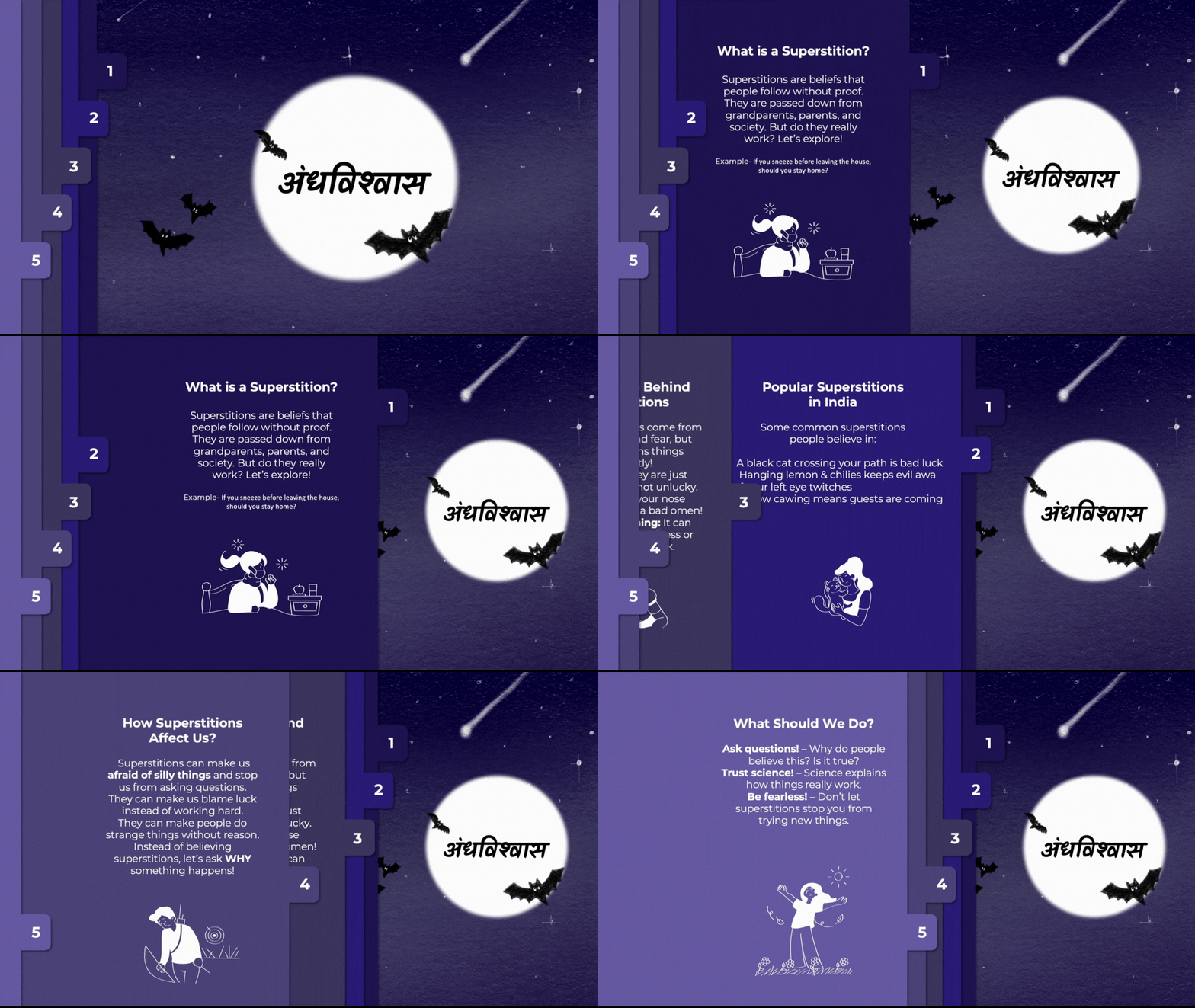
For this step, Educators will present interactive presentation on raising awareness to discourage superstition and foster self-belief. Which will be presented on smart boards or computer labs to students.
IDEATION
To create visuals engaging for kids, hand drawn digital illustration with crayon like texture is made with colourful palette to make overall visual interesting.
TYPOGRAPHY
For this design project, I have used “Kalam” available on Google fonts.This type is used because it has handwritten style which is more fun for kids publication.
क, ख, ग, घ, ङ; च, छ, ज, झ, ञ; ट, ठ, ड, ढ, ण; त, थ, द, ध, न; प, फ, ब, भ, म; य, र, ल, व; श, ष, स, ह
क्ष, त्र, ज्ञ, श्र
124567890#!@$&


An educational kit was conceptualised for fun learning of kids. The kit consists of waterfall card and other stationary items.
